
The $180K Question: What Manual Ops Actually Cost Your Team
TL;DR
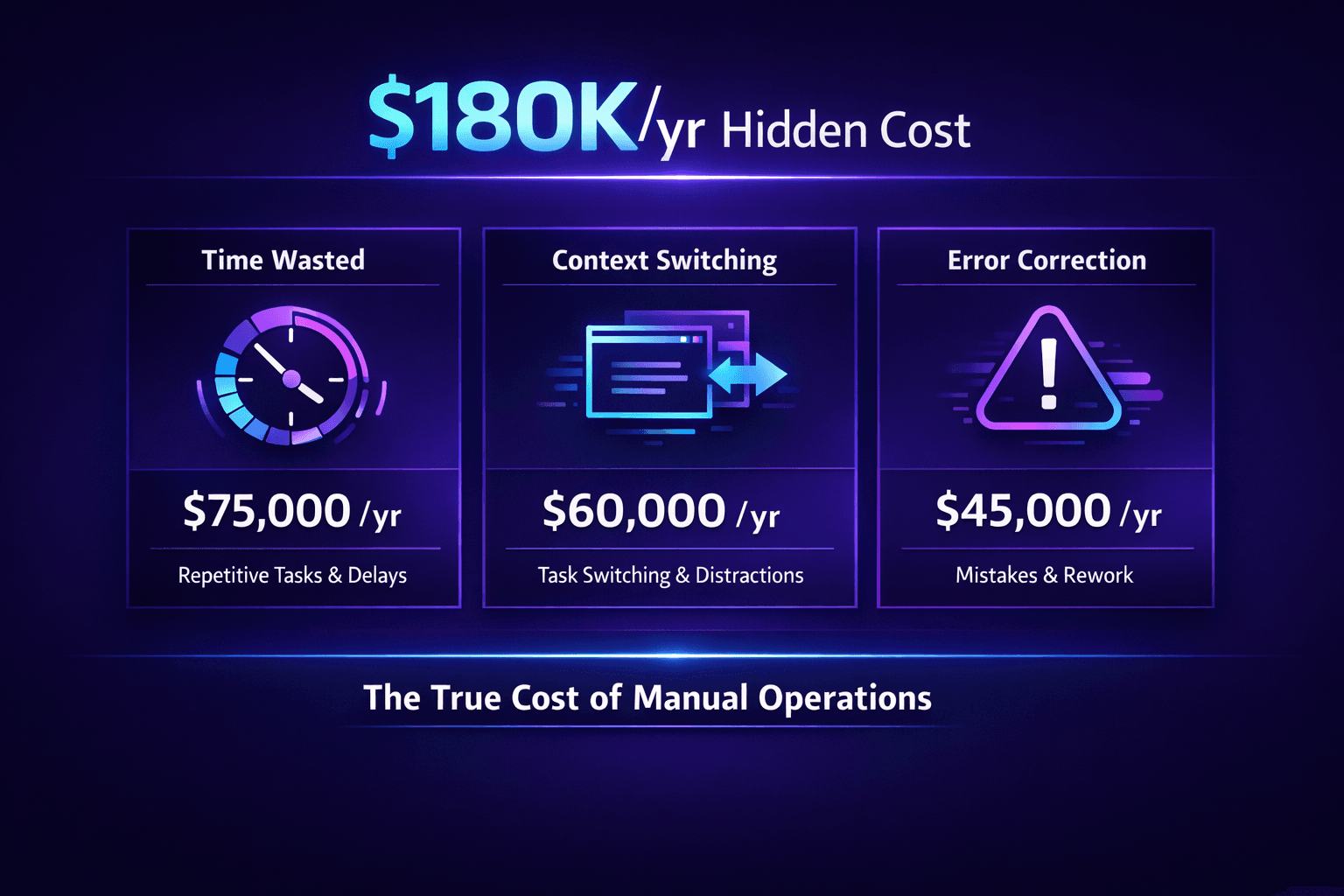
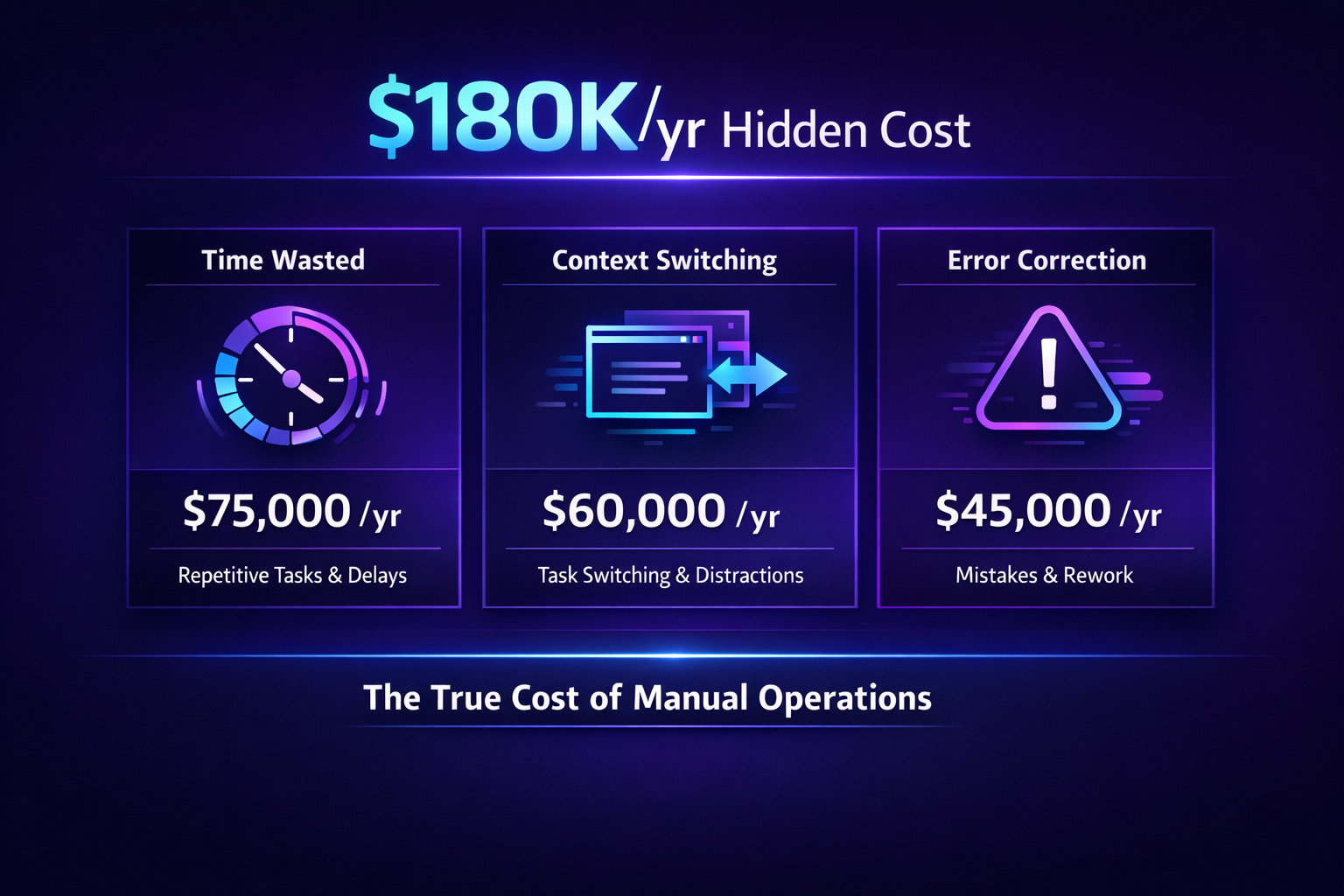
- The real cost of manual ops isn't just time — it's missed revenue. A 5-person team spending 30% of their week on manual handoffs is burning roughly $180K/year.
- More tools = more glue work. The average small business runs 16 to 24 separate tools, multiplying the integration surface and creating a massive bottleneck.
- Persistent digital workers are the solution. Trigger-based automations fire and forget. Digital workers stay on the task until it's done, fully orchestrating your workflow.
- Start where it hurts. Map your handoffs, calculate the cost, and automate the highest-impact workflows first.
Contents
- The Math Nobody Wants to Do
- Why More Tools Made It Worse
- What Actually Reduces Ops Overhead
- How to Find Your Biggest Automation Wins
- Conclusion
- Sources
Most ops teams measure automation ROI in "time saved." That's the wrong metric.
The real cost is missed revenue, delayed responses, and compounding inefficiency. A 5-person ops team doing 30% manual work is burning $180K/year on tasks a digital worker handles in minutes.
Here's the math — and what to do about it.
The Math Nobody Wants to Do
Let's break down the actual cost of your team's manual work.
Take an average ops team of 5 people. Assume an average salary of $120,000. If they spend just 30% of their week doing manual handoffs, data entry, and status updates, you are burning roughly $180,000 every single year.
But that's just the hard cost. The soft cost is much worse. Manual handoffs create delays, and delays lose deals.
According to the MIT Lead Response Management Study, leads contacted within 5 minutes are 21x more likely to qualify than those reached after 30 minutes. When your team is stuck moving data from Typeform to Salesforce to Slack, that 5-minute window closes — and the revenue walks.
| Team Size | Avg Salary | % Manual Work | Annual Manual Work Cost |
|---|---|---|---|
| 3 | $120,000 | 30% | $108,000 |
| 5 | $120,000 | 30% | $180,000 |
| 10 | $120,000 | 30% | $360,000 |
Why More Tools Made It Worse
Companies with fewer than 50 employees average 16 separate SaaS tools in their ops stack. Scale to 50 employees and that number jumps to 24. (Source: Exploding Topics, 2024)
You bought a CRM, a marketing automation platform, a billing system, a project management tool, and a shared inbox. But instead of solving the problem, you multiplied the integration surface.
Each tool is another silo. Each silo requires another manual handoff.
The real bottleneck isn't capability; it's orchestration. Single-trigger automations (like a basic Zapier or Make flow) are brittle. They fire and forget. If step 3 fails, steps 4 and 5 don't happen, and a human has to intervene.

What Actually Reduces Ops Overhead
You don't need more tools. You need fewer handoffs.
This requires a fundamental shift in how you think about workflow design.
- Persistent workers vs. trigger-based automations: A basic automation fires once. A digital worker is persistent. It stays on a task, handles exceptions, and ensures the job gets done.
- Orchestrated workflows: Stop thinking about single tasks and start thinking about the entire flow. Lead intake → qualification → booking → follow-up. One flow. No human switchboard.
- Audit trails and observability: Every action logged. Every handoff tracked. Your team knows what happened and why — without having to ask in Slack.
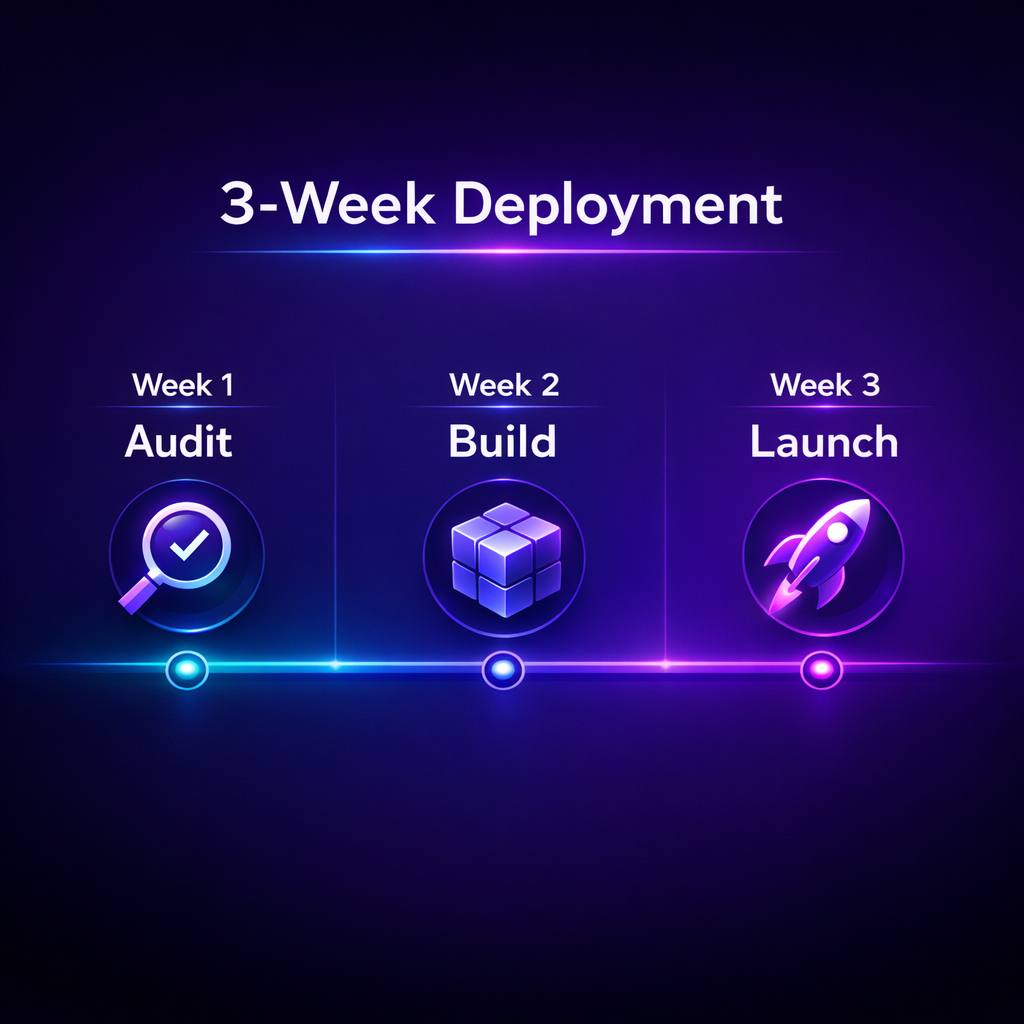
This is the core of the Agency of Poly tiered approach: assess first, pilot second, scale third. You don't try to boil the ocean. You automate the most painful handoffs first.
How to Find Your Biggest Automation Wins
If you want to stop burning $180K a year, you have to start mapping the pain.
Step 1: Map your current handoffs. Where does work pass between people or tools? Where do things sit in an inbox waiting for approval?
Step 2: Quantify the cost. Stop guessing.
Step 3: Prioritize by revenue impact, not task volume. Don't automate the task you do 100 times a day if it has no impact on revenue. Automate the task you do 5 times a day that directly impacts your sales pipeline.
Step 4: Get a focused assessment. You need a roadmap, not just a list of tools.
Conclusion
A 5-person team spending 30% of their time on manual work is costing you $180,000 a year.
The question isn't "should we automate?" The question is "which workflows first?"
Stop guessing where the bottlenecks are.
- Find out exactly what your manual ops are costing you with our free ROI Calculator.
- Ready to map your top 3 bottlenecks and get a prioritized plan? Grab our $47 Automation Assessment.
Sources
- Oldroyd, J. (2011). The Short Life of Online Sales Leads. MIT Sloan / Kellogg School of Management. Lead Response Management Study — analyzed 15,000+ leads across 100+ B2B companies.
- Exploding Topics. (November 2024). SaaS Statistics. explodingtopics.com/blog/saas-statistics